Cashback Mechanisms in UK Betting: How They Differ from Standard Free Bet Structures
Written by Avery Hansen · Aug 26, 2026
Cashback Mechanisms in British Betting: Contrasts with Traditional Free Bet Structures
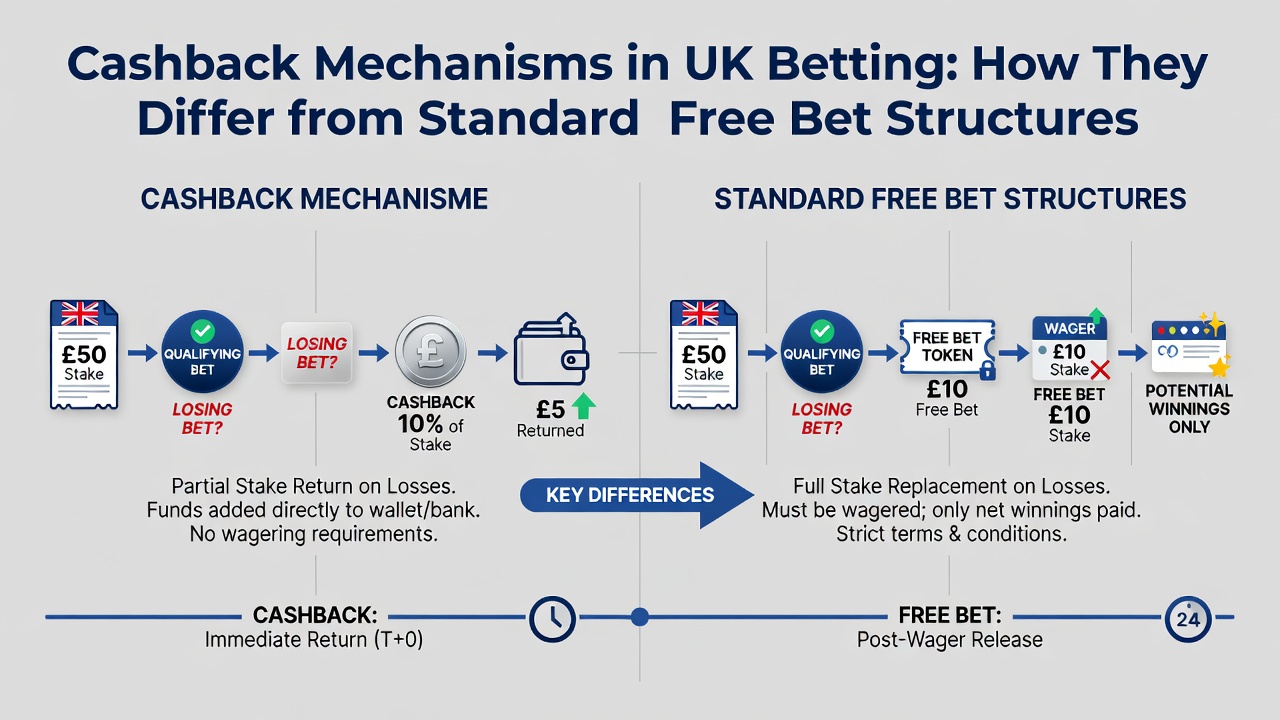
Operators across Britain have refined reward programs over recent years, and cashback mechanisms stand out for their distinct approach compared to standard free bet structures. These systems return a percentage of losses directly to player accounts after a defined period, often weekly or monthly, whereas free bets provide fixed stake credits upon meeting deposit or registration conditions. Data from industry analyses indicate that cashback calculations typically apply only to net losses once qualifying bets settle, which creates a different risk profile for participants who place larger wagers over extended sessions. Standard free bet structures usually require an initial deposit followed by wagering through a multiple of that amount before any bonus activates. Participants receive a credit they can stake on selected markets, yet any returns from those bets often carry further restrictions such as minimum odds or maximum payout caps. In contrast, cashback programs trigger automatically based on tracked losses without requiring separate activation steps in many cases, though eligibility may still depend on account verification and activity thresholds.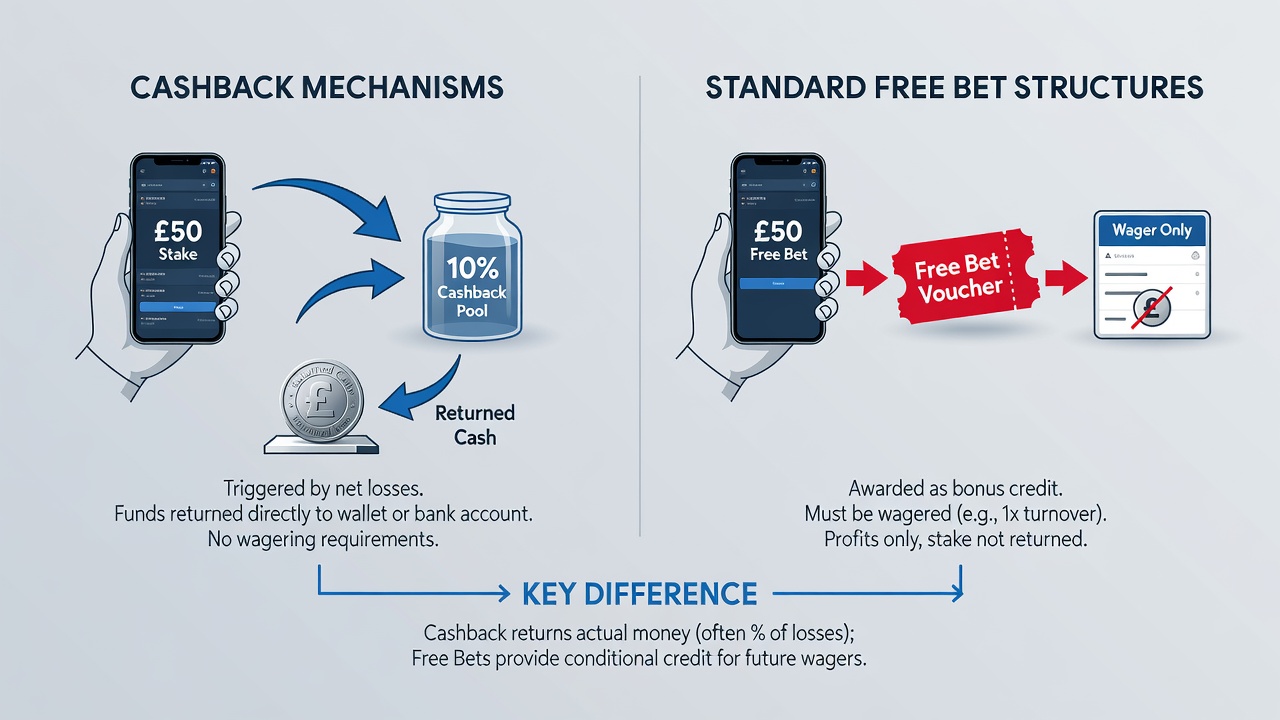
Operators across Britain have refined reward programs over recent years, and cashback mechanisms stand out for their distinct approach compared to standard free bet structures. These systems return a percentage of losses directly to player accounts after a defined period, often weekly or monthly, whereas free bets provide fixed stake credits upon meeting deposit or registration conditions. Data from industry analyses indicate that cashback calculations typically apply only to net losses once qualifying bets settle, which creates a different risk profile for participants who place larger wagers over extended sessions. Standard free bet structures usually require an initial deposit followed by wagering through a multiple of that amount before any bonus activates. Participants receive a credit they can stake on selected markets, yet any returns from those bets often carry further restrictions such as minimum odds or maximum payout caps. In contrast, cashback programs trigger automatically based on tracked losses without requiring separate activation steps in many cases, though eligibility may still depend on account verification and activity thresholds.Core Differences in Payout Timing and Eligibility
Payout timing separates the two models sharply. Free bets credit instantly or within hours of meeting terms, allowing immediate use on upcoming events, while cashback amounts process after the review period ends and appear as withdrawable funds or bonus credits depending on operator rules. Observers note that this delay in cashback means users absorb losses upfront before receiving any return, unlike free bets that reduce the initial outlay through credited stakes. Eligibility criteria also diverge. Free bet offers commonly target new customers exclusively and tie to specific deposit amounts or promotional codes, with expiry dates limiting the window for use. Cashback schemes extend to existing accounts more frequently, basing rewards on cumulative activity across a cycle rather than one-time actions, although some promotions cap the maximum refund per period or exclude certain bet types like in-play accumulators. Research indicates that these structures influence how bettors manage bankrolls, with cashback encouraging sustained play to offset downturns while free bets focus on trial of the platform.Impact on Wagering Requirements and Market Coverage
Wagering requirements attached to each system affect usability. Free bets often demand that winnings from the bonus stake meet additional multiples before withdrawal becomes possible, which extends the effective commitment. Cashback returns, by comparison, frequently convert to real money with lighter or no further playthrough obligations, though operators may apply them only to sports or casino sections separately. What's interesting here is how market coverage plays out. Many free bet promotions restrict usage to pre-match football or horse racing, whereas cashback calculations span broader categories including live betting and virtual games when those options form part of the tracked volume. Figures reveal that operators adjust these scopes seasonally, with adjustments noted around major tournaments that increase overall activity levels.