Charting Variations in Welcome Incentives Between Sportsbook and Casino Sections at Major Operators
Written by Blake Müller · Jun 28, 2026
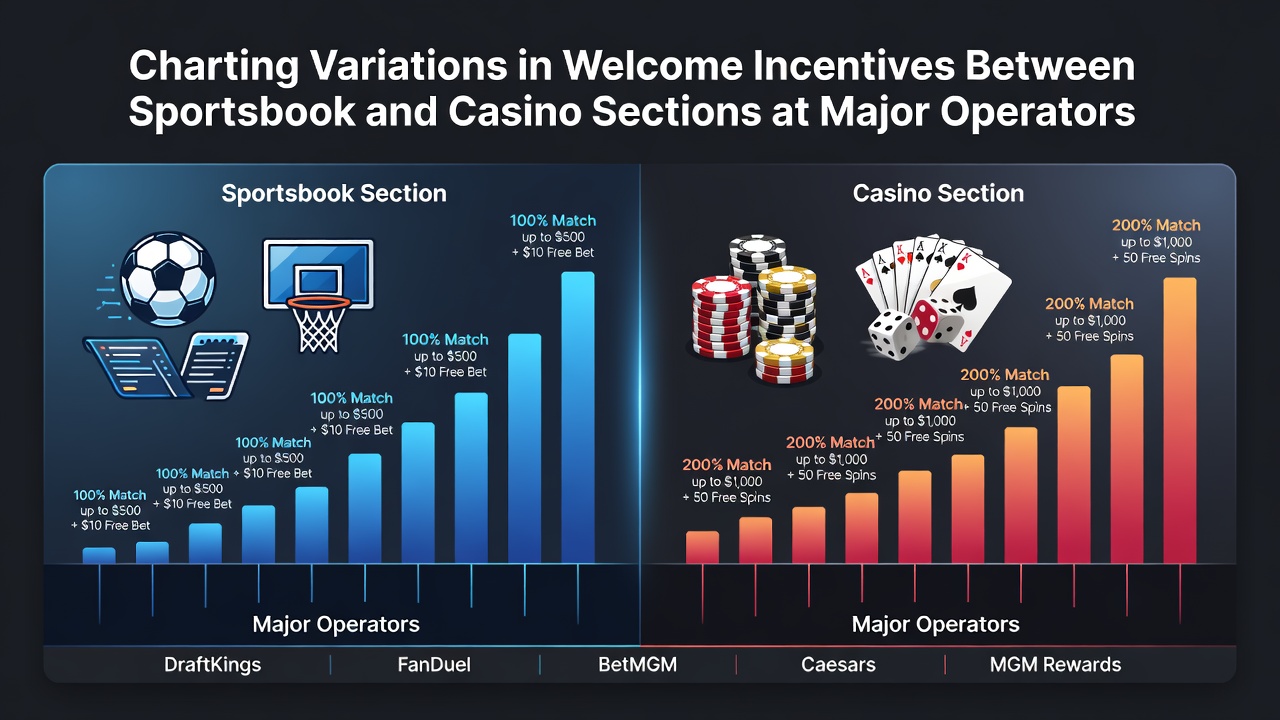
Charting Variations in Welcome Incentives Between Sportsbook and Casino Sections at Major Operators
Operators in competitive markets structure welcome incentives differently depending on whether the focus sits in the sportsbook or the casino section, and data from regulatory filings plus industry reports continue to highlight these patterns through June 2026. Major platforms such as those operating under licenses in New Jersey, Pennsylvania, and Ontario separate their acquisition offers to match player behavior, with sportsbook sections leaning toward risk-based rewards while casino sections emphasize volume-driven play through spins and deposit matches.
Structural Differences in Offer Design
Sportsbook welcome packages typically revolve around matched deposits or risk-free bets that tie directly to event outcomes, whereas casino sections favor free spins packages and reload-style bonuses that require repeated wagers across slot titles or table games. Observers note that this split arises because sports betting attracts users seeking short-term engagement tied to live events, while casino play tends toward extended sessions that operators monetize through higher house edges over time.
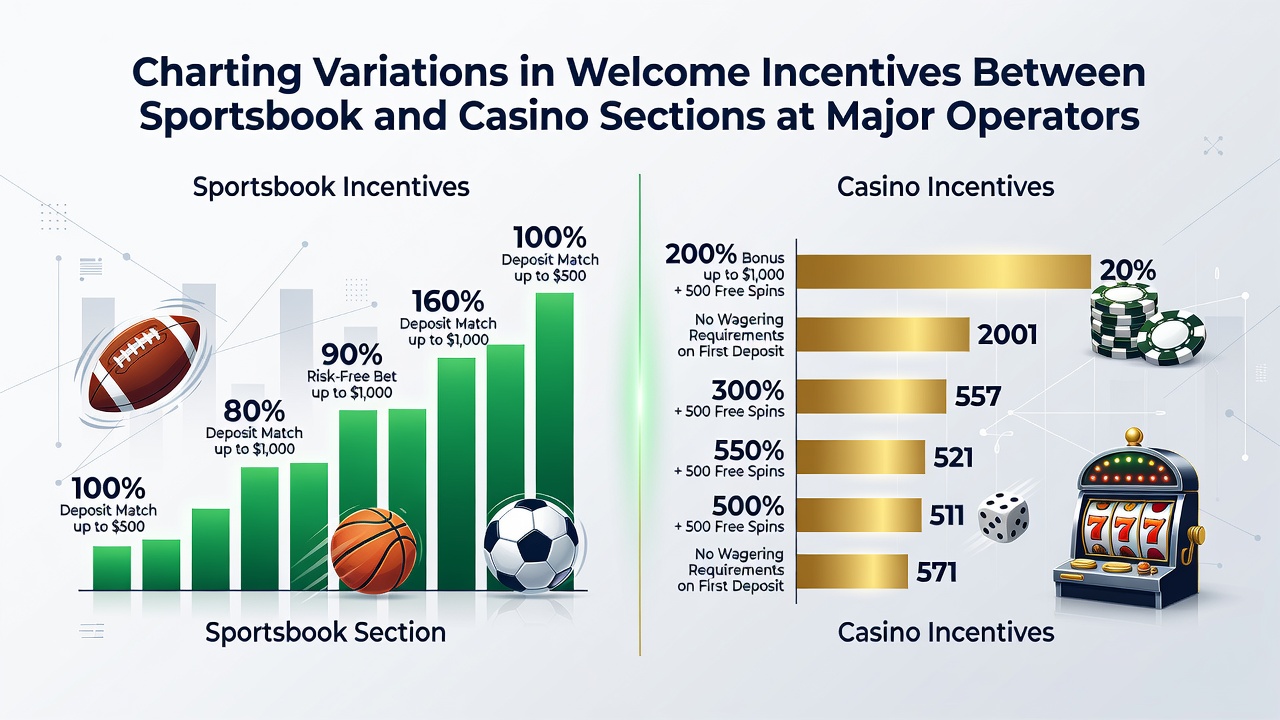
According to data compiled by the Nevada Gaming Control Board, average sportsbook deposit-match percentages reached 100 percent on initial funds up to set caps in 2025 filings, yet casino welcome offers in the same jurisdictions frequently capped matches at 200 percent while layering wagering requirements that span 20x to 40x the bonus amount. These thresholds create measurable divergence in how quickly new users convert incentives into withdrawable balances.
Regional Patterns Across Licensed Markets
Platforms active in multiple jurisdictions adjust incentive structures to align wth local rules, and figures from the Ontario Lottery and Gaming Corporation reveal that sportsbook sign-up offers in that province frequently include bet credits valid on specific leagues, while casino sections distribute free spins tied to progressive jackpot pools. Similar segmentation appears in Australian state-regulated environments where operators must publish bonus terms under consumer protection guidelines.
One study released through the University of Nevada, Las Vegas gaming research center examined 12 major operators and found sportsbook sections delivered an average effective value of 25 percent of the deposit in bonus funds after accounting for odds adjustments, whereas casino sections yielded closer to 35 percent when measured against slot return-to-player rates and spin quantities. The research tracked redemptions through the first 90 days of account activity.
Wagering Requirements and Playthrough Conditions
Requirements attached to each vertical further separate the two categories, with sportsbook bonuses often carrying 1x playthrough on the matched amount plus the deposit, while casino incentives demand higher multiples because game volatility differs. Data indicates operators apply these multipliers uniformly across user bases yet tailor eligible games lists so that low-edge table games in casinos rarely contribute fully toward clearing targets.
What's notable is how expiry windows interact with these conditions, since many sportsbook credits must be used within seven days of issuance whereas casino free spins frequently extend to 30 days with winnings subject to separate 14-day cash-out periods. Industry reports from the European Gaming and Betting Association document these timelines across cross-border operators and show they influence retention rates differently depending on vertical.
Examples from Leading Platforms
Take operators that maintain dual sections under single brands: their sportsbook promotions commonly feature parlay boosts or profit boosts on select fixtures, while the casino side rolls out daily free spin drops that accumulate only after the initial welcome package clears. Those who've reviewed compliance documents note that such layering prevents users from combining vertical-specific offers in ways that would exceed internal risk thresholds.
Additional case examples appear in markets where new licenses launched during 2025 and carried into June 2026, with several platforms introducing hybrid welcome flows that start users in one section before unlocking the second. Regulatory updates in these regions require clear disclosure of which bonus applies to which product category, reducing overlap that previously blurred distinctions.
Market Data and Conversion Trends
Conversion metrics collected by independent analytics groups show sportsbook welcome incentives achieve higher initial claim rates, often exceeding 70 percent within the first week, while casino offers see steadier uptake spread across the first month. These patterns hold across operators because event-driven sports calendars create urgency that static slot promotions lack.
Yet the same datasets indicate casino sections generate longer average session times once users engage, which offsets lower claim volumes through sustained revenue. Operators therefore calibrate incentive sizes accordingly, allocating larger nominal bonuses to casino sections to compensate for the slower activation curve.
Conclusion
Variations in welcome incentives between sportsbook and casino sections reflect deliberate segmentation by major operators responding to distinct player behaviors, regulatory environments, and revenue models. Data from multiple jurisdictions through June 2026 continues to illustrate how deposit matches, free bets, spins, and playthrough conditions diverge while remaining subject to the same overarching licensing frameworks. Those monitoring these trends observe consistent structural differences that operators maintain to optimize acquisition across product verticals.