31 May 2026
Expiration Timelines and Bettor Behavior at Major UK Operators
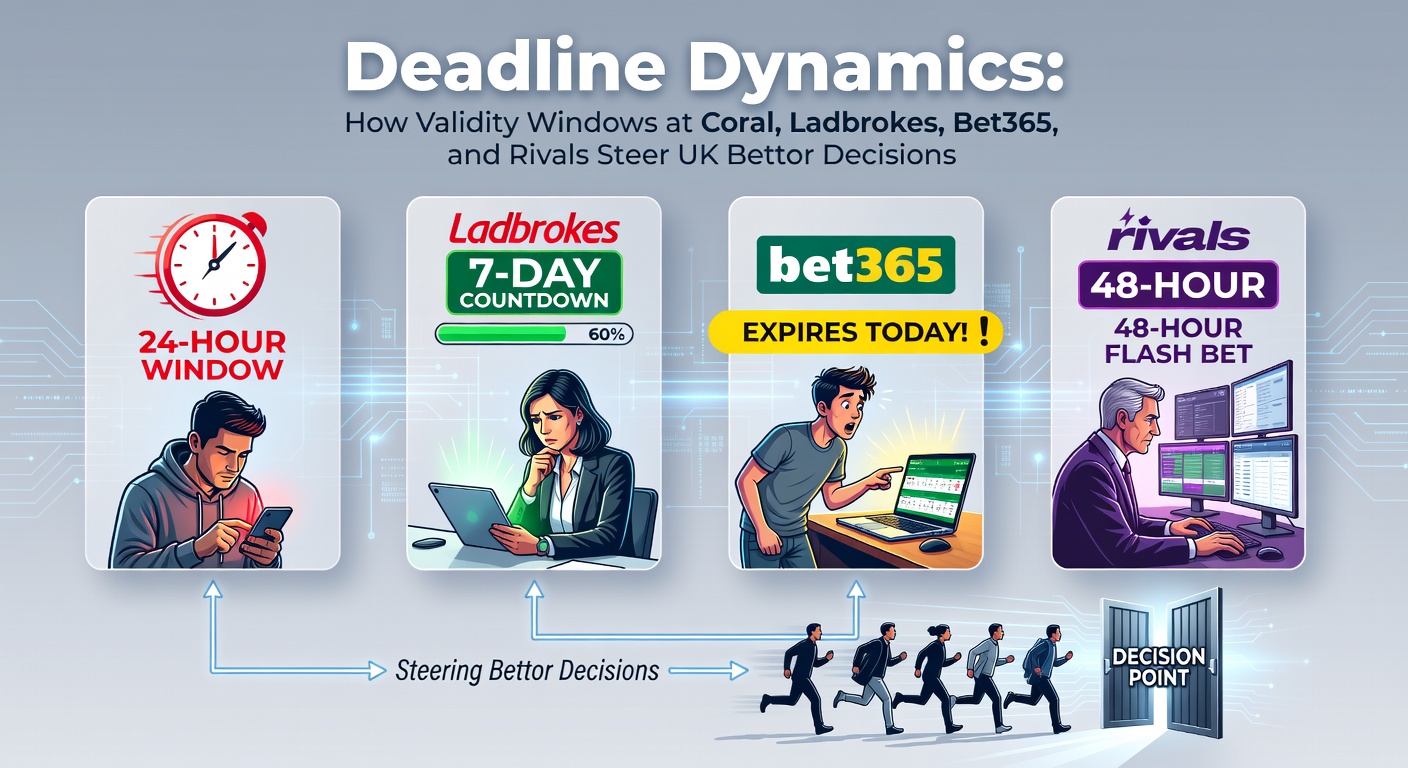
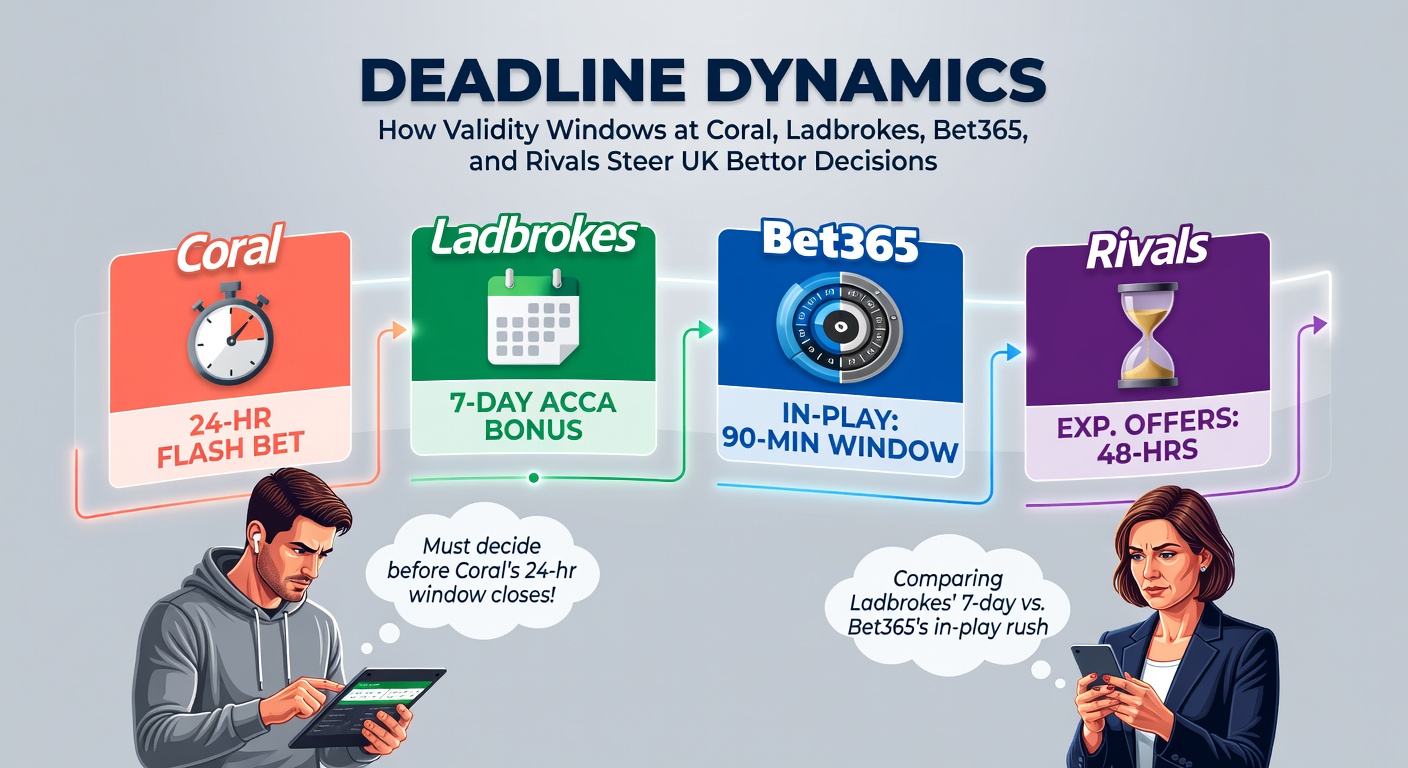
Validity windows attached to welcome offers and ongoing promotions create measurable patterns in how bettors time their activity at Coral, Ladbrokes, Bet365 and rival operators. Coral typically sets a seven-day window for free bet redemption after activation, whereas Ladbrokes extends the same type of credit to thirty days in many cases, giving users longer to identify suitable markets before the credit disappears. Bet365 structures most new-customer bonuses around a fourteen-day expiry, a middle ground that still pressures users to act before the period closes.
Market Data on Window Lengths
Industry tracking from 2025 shows that operators adjust these time frames in response to seasonal demand and regulatory updates, with shorter windows correlating to higher immediate engagement rates. Research published by the Australian Gambling Research Centre indicates that time-limited incentives increase wager frequency within the first forty-eight hours after activation across multiple jurisdictions. UK operators apply similar mechanics even though local rules differ, and observers note that the same urgency effect appears in account-level data released by the operators themselves.
Coral and Ladbrokes Compared
Coral’s shorter seven-day cycle means bettors who claim a bonus must quickly decide between football accumulators, horse racing or in-play options, while Ladbrokes users can spread selections across a full month. This difference leads some account holders to maintain profiles at both sites, using the longer Ladbrokes window for considered bets and the Coral window for quicker markets. Data released in operator reports reveals that Ladbrokes sees a secondary spike in activity around day twenty of the validity period, when users who have not yet redeemed begin to act to avoid losing the credit.
Bet365 and Competitor Approaches
Bet365 maintains a consistent fourteen-day rule across most promotions, yet introduces occasional extensions during major tournaments, giving users extra time when volume spikes. Rivals such as William Hill and Paddy Power alternate between seven-day and twenty-one-day windows depending on the promotion type, creating an environment where bettors compare expiry dates before choosing which platform to fund first. Those who track multiple accounts often list expiry dates in notes apps, treating the deadlines as a scheduling tool rather than a restriction.
Shop closures planned by Evoke for May 2026 have already prompted some operators to shift more promotional volume online, where validity windows can be monitored automatically through app notifications. This transition means digital users encounter reminders that were previously handled by counter staff, tightening the connection between deadline awareness and actual redemption behavior.
Behavioral Patterns Observed
Studies from the National Council on Problem Gambling in the United States demonstrate that countdown timers on bonus balances raise the likelihood of same-day wagering by measurable percentages, and UK platform analytics reflect parallel trends. Bettors who receive push notifications about expiring credit place more single-leg bets rather than waiting for multi-leg opportunities that may not materialise in time. The pattern holds across age groups, though younger users show stronger responses to in-app countdown graphics.
Strategic Adjustments by Operators
Operators refine window lengths after reviewing redemption curves, extending periods when data shows high abandonment rates or shortening them when early engagement already meets targets. Ladbrokes has tested hybrid models that grant an extra seven days if a minimum stake threshold is met within the original window, while Coral keeps its standard seven-day rule intact across most campaigns. These tweaks appear in terms-and-conditions updates that users must accept before claiming new offers.
Conclusion
Validity windows function as scheduling mechanisms that steer when and where UK bettors place wagers. Coral’s shorter cycles accelerate decisions, Ladbrokes’ longer ones allow spread-out activity, and Bet365’s middle-range windows balance both approaches. Rival operators continue to vary their own time frames in response to the same data sets, producing a market in which bettors routinely compare expiry dates before committing funds. As the industry moves further online ahead of the May 2026 shop reductions, these time-based structures remain central to how platforms guide user behavior.