21 Jun 2026
Bonus Configurations and Their Effects on Long-Term Retention in Britain's Operator Landscape
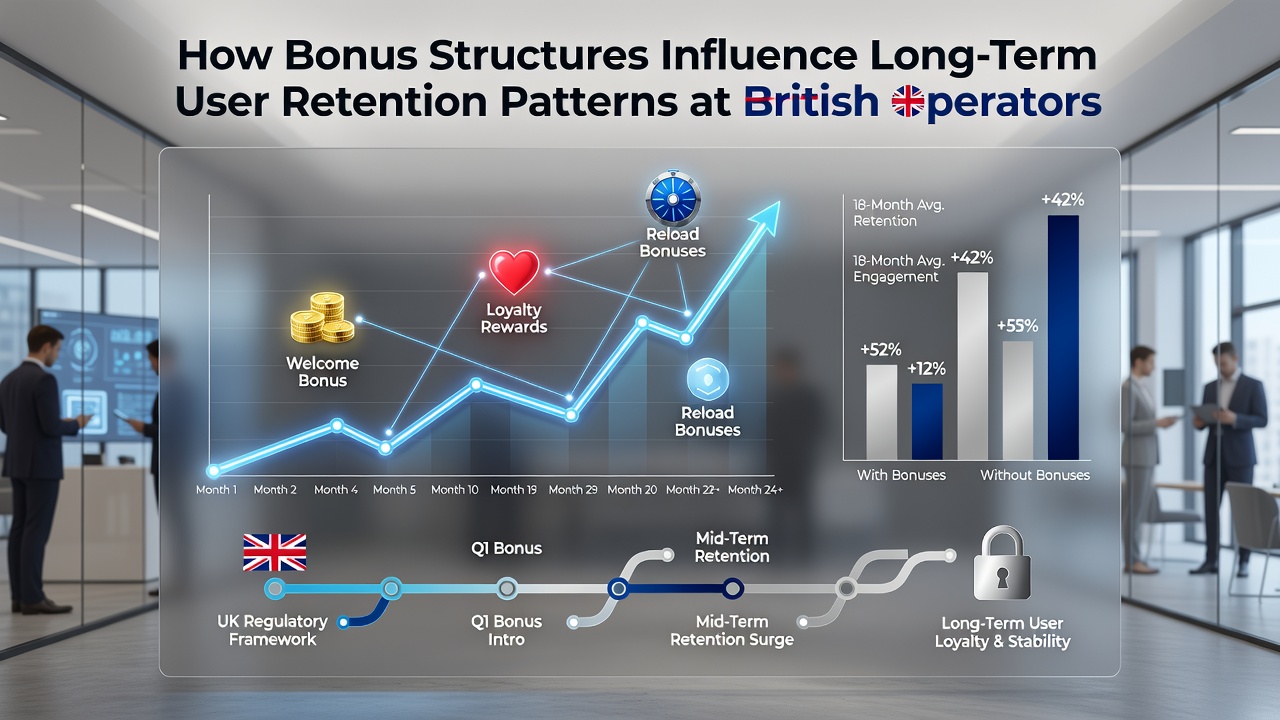 British operators have refined bonus systems over recent years, and these designs now play a central role in shaping how users remain active months after initial sign-up. Data from industry tracking shows that retention curves flatten or rise depending on whether operators deploy one-time welcome packages, ongoing loyalty tiers, or hybrid cashback models that release funds gradually. Observers note patterns where users who receive staggered rewards tend to log in more consistently than those who receive all value upfront. Research indicates that welcome bonuses with high wagering multipliers often produce short spikes in activity followed by sharp drop-offs once requirements clear. In contrast, structures that tie additional credits to regular deposits or play volume create steadier engagement loops. Figures from multiple operator reports reveal that users exposed to loyalty point systems accumulate activity at rates 25 to 40 percent higher than control groups after the first quarter of membership.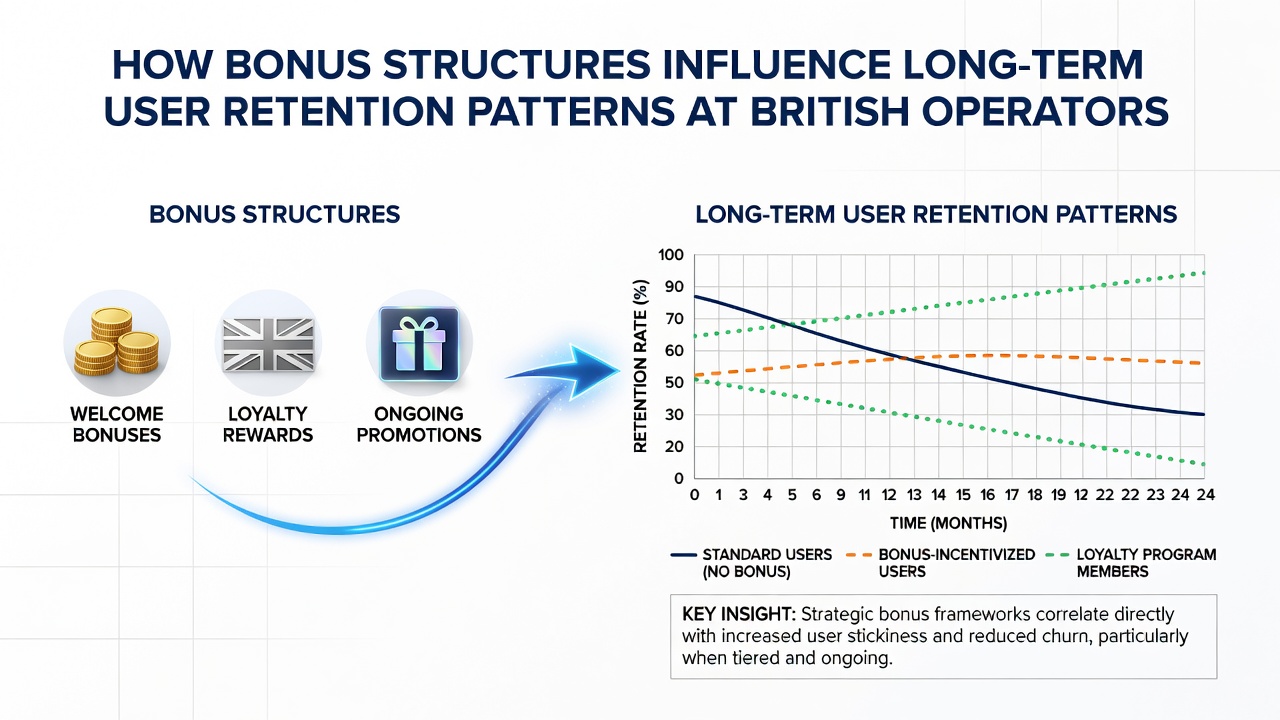
British operators have refined bonus systems over recent years, and these designs now play a central role in shaping how users remain active months after initial sign-up. Data from industry tracking shows that retention curves flatten or rise depending on whether operators deploy one-time welcome packages, ongoing loyalty tiers, or hybrid cashback models that release funds gradually. Observers note patterns where users who receive staggered rewards tend to log in more consistently than those who receive all value upfront. Research indicates that welcome bonuses with high wagering multipliers often produce short spikes in activity followed by sharp drop-offs once requirements clear. In contrast, structures that tie additional credits to regular deposits or play volume create steadier engagement loops. Figures from multiple operator reports reveal that users exposed to loyalty point systems accumulate activity at rates 25 to 40 percent higher than control groups after the first quarter of membership.Types of Bonus Structures and Observed Retention Curves
Operators typically segment bonuses into deposit matches, free bet credits, cashback percentages, and tiered loyalty schemes. Each category correlates with distinct retention timelines. Deposit-match offers frequently drive sign-ups but show retention decay after 60 to 90 days unless paired with recurring incentives. Free bet structures that require ongoing qualification maintain higher month-three activity levels because users must return to trigger the next round. Cashback programs, which return a percentage of losses on a weekly or monthly basis, link directly to sustained play among higher-volume users. Those who've studied operator datasets find that cashback participants exhibit lower churn rates during losing streaks, since the rebate mechanism provides an immediate incentive to continue. Loyalty tiers that unlock status benefits such as faster withdrawals or exclusive events produce the most extended retention tails, with some cohorts remaining active beyond twelve months at rates double those of non-tiered users.Data Patterns Emerging in Mid-2026
As of June 2026, aggregated platform metrics show a measurable shift toward hybrid models that combine immediate rewards with long-horizon incentives. Retention at the six-month mark improved across several major operators after they introduced points that convert to both bonus funds and status perks. The change coincided with broader adoption of personalized reward triggers based on individual play frequency rather than blanket promotions. External analyses support these internal findings. According to research published by the Australian Institute of Family Studies, reward structures that distribute value over time rather than in a single lump sum correlate with steadier participation across gambling platforms. Similar observations appear in reports from North American regulatory bodies tracking online operators, where retention metrics improve when bonus release schedules align with natural user deposit cycles.